“[Universal Design for Learning] UDL is a framework to improve and optimize teaching and learning based on what we know about the human brain” (CAST website).
The term UNIVERSAL DESIGN FOR LEARNING means a scientifically valid framework for guiding educational practice that:
(A) provides flexibility in the ways information is presented, in the ways students respond or demonstrate knowledge and skills, and in the ways students are engaged; and
(B) reduces barriers in instruction, provides appropriate accommodations, supports, and challenges, and maintains high achievement expectations for all students, including students with disabilities and students who are limited English proficient (Higher Education Opportunity Act, 2008).
UDL guides our pedagogical and instructional design decisions at Endicott for promoting a rigorous, high quality, and accessible learning experience for all students.
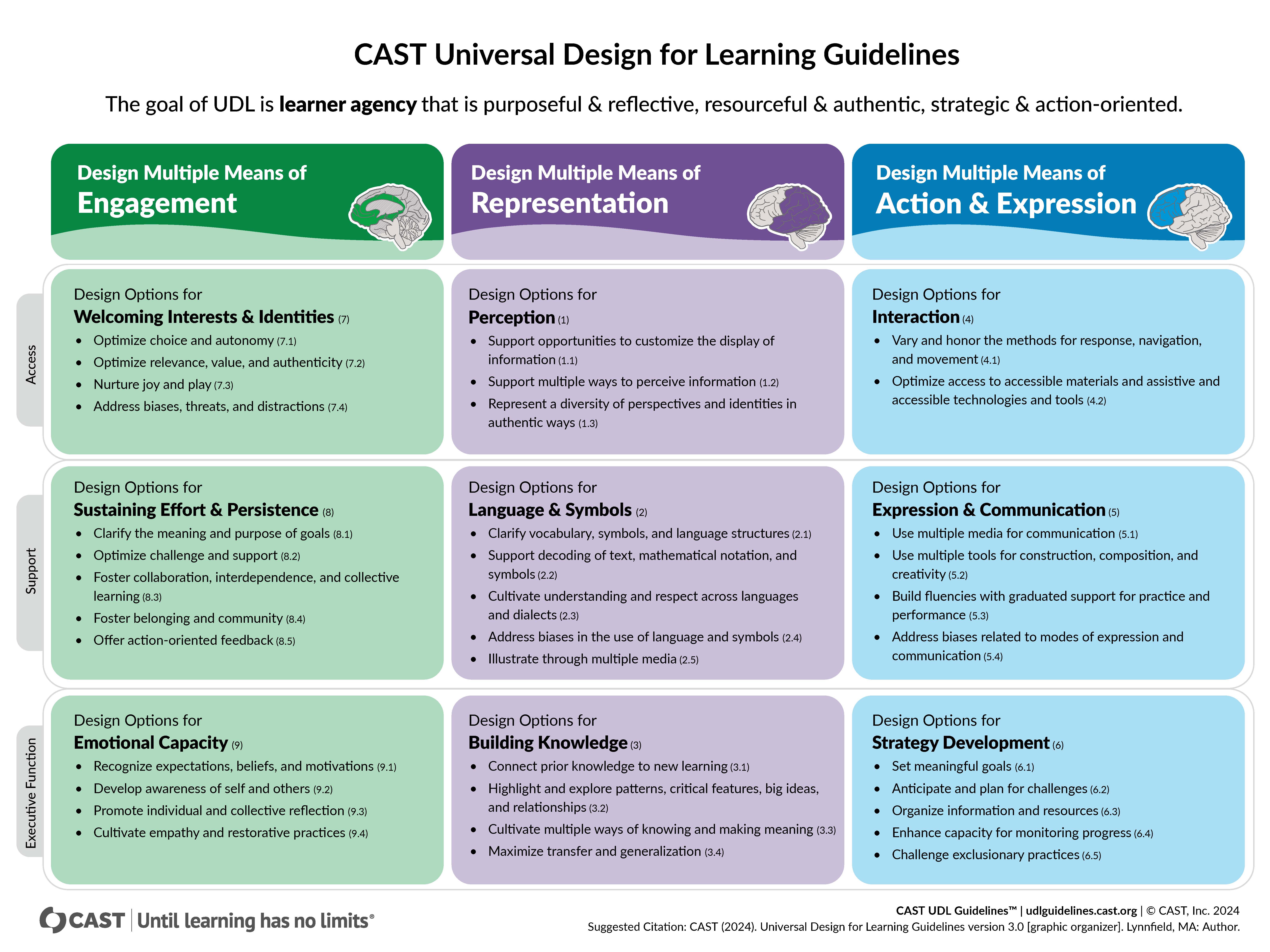
CAST (2024). Universal design for learning guidelines version 3.0 [graphic organizer]. Lynnfield, MA. https://udlguidelines.cast.org/
Resources:
Rubric for Evaluating Your Course Syllabus: Information about course goals and objectives, grading procedures, support services, and course policies.
Further Information and Resources on UDL: Additional information and resources on UDL
 EC Academic Technology